Shabbat Miketz (מִקֵּץ – At the End), Rosh Chodesh Tevet, Hanukkah
Genesis 41:1–44:17 – Numbers 28:9–15 – Numbers 7:1–8:4 – Isaiah 66:1, 24 – Zechariah 2:14–4:7
In the first Sefer, Joseph interprets Pharaoh’s dreams and becomes viceroy of Egypt. Through his wisdom, he organizes grain reserves to face the coming famine. His brothers go down to Egypt to buy food, and Joseph tests them by demanding Benjamin’s presence.
In the second Sefer, the Torah describes the special sacrifices for Shabbat and Rosh Chodesh, marking the renewal of the lunar cycle.
In the third Sefer, the reading focuses on the offerings of the tribal leaders[1] during the inauguration of the Mishkan.
The Hanukkah Haftarah, taken from the prophet Zechariah, presents the vision of the golden Menorah fed by two olive trees and reminds us that deliverance will come “not by might, nor by power, but by My spirit.”
Zechariah 2:14
רָנִּי וְשִׂמְחִי, בַּת-צִיּוֹן–כִּי הִנְנִי-בָא וְשָׁכַנְתִּי בְתוֹכֵךְ, נְאֻם-ה’.
Rejoice and be glad, daughter of Zion! For behold, I am coming to dwell in your midst, says the Lord.
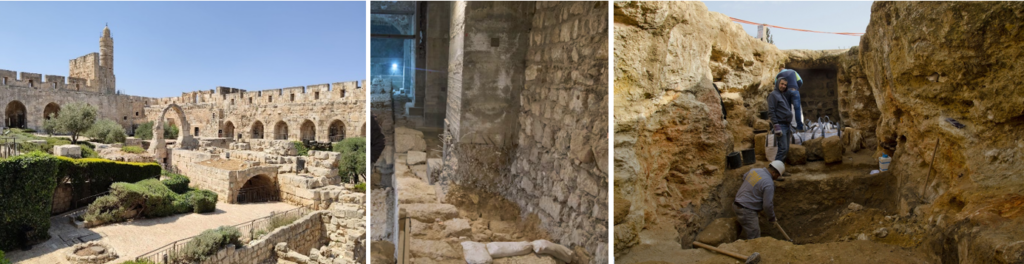
The Hasmonean walls[2] discovered in recent days are tangible witnesses of Jewish presence in Jerusalem during the Second Temple period. Located near the Tower of David, within the Kishle complex[3], this imposing fortification—accompanied by arrowheads, lead bullets, and catapult stones—attests to the fierce battles[4] of the Maccabean revolt against the Greeks, the founding event of Hanukkah.
These walls recall the resilience and permanence of the Jewish people in Jerusalem. This archaeological discovery, announced recently, is not merely a testimony of the past: it sheds light on our present by reaffirming the unbreakable bond between Jerusalem and the Jewish people.
[1] This Shabbat corresponds to the 6th day of Hanukkah: the reading mentions the offering of the tribe of Gad (Numbers 7:42).
[2] This section of the wall measures about 50 meters long and 5 meters wide. It is considered part of the foundations of a larger wall system that surrounded ancient Jerusalem and included 60 watchtowers over 10 meters high.
[3] The Kishle, meaning “barracks” (kışla in Turkish), is an Ottoman structure built around 1834 by Ibrahim Pasha as a military barracks. Converted into a prison and police station under the Ottoman Empire (1841), it is now part of the Tower of David Museum. This site reveals unique historical layers: remains of Hezekiah’s wall, Hasmonean fortifications, and traces of Herod’s palace, offering a journey through three millennia of history.
[4] Maccabean revolt: 2,189 years ago, on 25 Kislev 3597 (164 BCE), marking the dedication of the Temple and the origin of the Hanukkah festival.