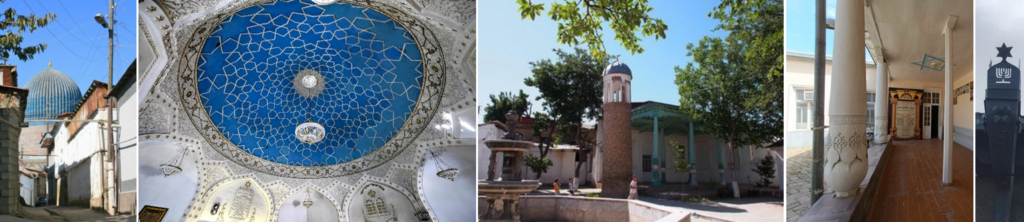
Al‑Ula, Saudi Arabia

Matot–Massé (מַטּוֹת–מַסְעֵי — Tribes – Journeys)
Numbers 30:2–36:13 • Irmyahou (Jeremiah) 2:4–28; 3:4

Matot deals with vows, then with the war against Madyan and the division of the territories located east of the Jordan. Massé recounts the forty‑two stages of the wilderness journey, sets the boundaries of Canaan, establishes the cities of refuge, and concludes with the inheritance of the daughters of Tselof’had. In the haftara[1], the prophet Irmyahu calls Israel to return to God and denounces the breach of the Covenant that has weakened the people.

Numbers 31:2[2]
 
נְקֹם נִקְמַת בְּנֵי־יִשְׂרָאֵל מֵאֵת הַמִּדְיָנִים
“Carry out the vengeance of the children of Israel upon the Madyanites.”

Ancient sources[3] place the territory of the Madyanites in the northwest of present‑day Saudi Arabia, around the Wadi al‑Qurā (Valley of the Villages). It was in the heart of this region that, in 2019, Franco‑Saudi excavations[4] uncovered, in the city of Al‑‘Ula (The Sublime), a settlement occupied between the 3rd and 7th centuries CE. Domestic refuse pits yielded sheep and goat bones, but no camel remains[5], despite the animal’s omnipresence in the region. Nabatæan inscriptions bearing Jewish names[6] corroborate the existence of a Jewish community established in this valley. The site was abandoned at the beginning of the 7th century, but a new settlement was immediately built nearby. Medieval Hebrew inscriptions — distinct from the earlier Nabatæan inscriptions — attest to a Jewish presence[7] still documented there until the 10th century.

[1] The haftara belongs to the cycle of tlata de‑puranuta (תלתא דפורענותא), an Aramaic expression meaning “the three admonitions.” This cycle designates the three haftarot read on the three Sabbaths preceding Tisha be‑Av (Irmyahu 1–2; Irmyahu 2–3; Yeshayahu 1), independently of the content of the parasha.
[2] נִקְמַת בְּנֵי־יִשְׂרָאֵל (nikmat bene Israel), “the vengeance of the children of Israel.” In the following verse (Numbers 31:3), when Moshe conveys this command to the people, the expression becomes נִקְמַת־ה׳ (nikmat Hashem), “the vengeance of the Eternal.” Rashi explains this shift: whoever attacks Israel attacks the Holy One, blessed be He; the vengeance of Israel and that of God are therefore inseparable.
[3] Madyan is identified in Jewish sources — Onkelos (Targum, 2nd century) and Flavius Josephus (Jewish Antiquities, 1st century) — in Greek sources — Ptolemy (Geography, 2nd century) and Strabo (Geography, 1st century BCE) — as well as in medieval Arabic sources — al‑Ya‘qūbī (Kitāb al‑BuldanBook of the Lands, 9th century), al‑Muqaddasī (Aḥsan al‑TaqāsīmThe Best Division of the Provinces, 10th century), and Yāqūt al‑Ḥamawī (Mu‘jam al‑BuldanDictionary of Places, 13th century). All locate Madyan in the northwest of Arabia, around Tabūk, the Gulf of Aqaba, and the Wadi al‑Qurā — corresponding to the present‑day region of Al‑‘Ula.
[4] Excavations conducted by archaeologists Jérôme Rohmer (France) and Abdulrahman Alsuhaibani (Saudi Arabia), in collaboration with teams from the CNRS (French National Centre for Scientific Research), AFALULA (French Agency for the Development of Al‑‘Ula), and the RCU (Royal Commission for AlUla). The results were published in Arabian Archaeology and Epigraphy, 2025.
[5] The dromedary and the camel are classified among impure animals (Leviticus 11:4; Deuteronomy 14:7). Their presence in the region is massive from antiquity onward, but their absence from the refuse pits of Al‑‘Ula suggests dietary practices consistent with biblical prescriptions.
[6] The Nabatæan inscriptions discovered on ostraca and architectural blocks — written from right to left — bear Jewish anthroponyms such as ʾnny bn ywsf (ענני בן יוסף, Anani ben Yosef) or nhmy bn ydy (נחמי בן ידי, Neḥami ben Yadi), corroborating other evidence of a Jewish community established in the valley of the Wadi al‑Qurā.
[7] Medieval Arabic geographers — notably al‑Ya‘qūbī — preserve the memory of an ancient Jewish presence in the region of the Wadi al‑Qurā. Medieval Hebrew inscriptions, found at a nearby site in Al‑‘Ula and distinct from the earlier Nabatæan inscriptions, attest to a Jewish presence in this region until the 10th century.

Musmeah Yeshua, Rangoon, Burma

1896

Pinchas (פִּינְחָס)
Numbers 25:10–30:1 • 1 Kings 18:46–19:21

The parasha recounts how Pinchas acts with a zeal that earns him the covenant of an everlasting priesthood, passed down to his descendants, while the haftarah shows Elijah, exhausted yet likewise filled with fervent zeal, receiving from God the strength to continue his mission and appoint Elisha as his successor.

1 Kings 19:16
 …
וְאֶת־אֱלִישָׁע בֶּן־שָׁפָט מֵאָבֵל מְחוֹלָה, תִּמְשַׁח לְנָבִיא תַּחְתֶּיךָ.
“And Elisha son of Shaphat, from Avel‑Meholah, you shall anoint as prophet in your stead.”

In 1978, Isaac Samuels, guardian of the Musmeah Yeshua Synagogue (משמיע ישועה – “He Who Makes Salvation Heard”), in the heart of old Rangoon (Yangon), in Burma (Myanmar), entrusted his son Moses with the responsibility of watching over the synagogue and made him promise never to abandon it. Moses kept this promise, and upon his death in 2015, his son Sammy naturally assumed the stewardship of the place[1], together with his sisters Dina and Kaznah.

It is the only synagogue[2] in the country , inaugurated in 1896. Its style blends British colonial architecture with Sephardi tradition, featuring rattan benches suited to the tropical climate and a dome painted in blue and white. It once served a prosperous Jewish community[3], which owned 126 Torah scrolls, of which only two remain today.

Following the Japanese invasion, and later with the establishment of the military regime [4], the community gradually dispersed, family by family, until only about twenty Jews remain in the country today.

[1] Testimonies from the Samuels family, collected in reports devoted to the Musmeah Yeshua Synagogue (notably Jerusalem Post and Haaretz, as well as the Jewish Telegraphic Agency (JTA) dispatch of April 29, 2015 announcing the death of Moses Samuels). The story is also documented in the film The Last Synagogue of Yangon, directed by Maya Ben‑Dor, and in the work of Ruth Levy, historian of Jewish communities in Southeast Asia, and Graham Harvey, British anthropologist specializing in religious minorities.
[2] An earlier wooden synagogue was built in 1854.
[3] The Jewish community of Burma numbered around 2,500 people in 1940, making it one of the largest in Southeast Asia. It consisted mainly of Baghdadi Jews who had arrived from Iraq in the 18th–19th centuries and settled in Calcutta and Bombay, along with several Bene Israel families — a very old community from the Konkan coast (Bombay), combining Middle Eastern Jewish and Indian ancestry — as well as Jews from Cochin, established since the 15th century in Kerala, bearers of Sephardi and Yemenite traditions.
[4] The Japanese invasion of 1942 led to the evacuation of most of Rangoon’s Jews to British India. Later, the establishment of the military regime in 1962 brought political and economic isolation that accelerated the exodus of the Jewish community and other minorities. The country remains today under the authority of a military junta, the result of yet another coup d’État (2021), maintaining an authoritarian regime and strict control over political life.

Trenčín Synagogue, Slovakia

1913/2025

Balak (בָּלָק) [1]
Numbers 22:2–25:9 • Micah 5:6–6:8

Balak, king of Moab, hires Balaam, a diviner from Pethor [2], to curse Israel. He tries three times — and three times Balaam blesses instead. The prophet Micah reminds us that God does not require outward rites or excessive sacrifices, but moral conduct.

Numbers 24:5
מַה־טּוֹבוּ אֹהָלֶיךָ יַעֲקֹב; מִשְׁכְּנֹתֶיךָ יִשְׂרָאֵל.
“How good are your tents, Jacob — your dwellings, Israel.”

The Great Synagogue of Trenčín has become beautiful once again.

Built in 1913 by the architect Richard Scheibner[3] in the rare Byzantino–Art Nouveau style [4], it is distinguished by a large central dome whose shape evokes a Mongolian yurt.

During the period of the Slovak State[5], an ally of the Reich during the Second World War, the Jewish community was deported and the synagogue stripped of its furnishings. Under the communist regime in Czechoslovakia, it served as a clothing warehouse, and was later whitewashed and converted into a cultural center.

The synagogue was solemnly reopened in November 2025, following restoration work [6] that restored its original colors. In addition to synagogue services, it now hosts exhibitions — including a permanent one on the history of the city’s Jews — as well as concerts and lectures. In 2026, Trenčín is a European Capital of Culture, and the synagogue is among the major sites of the program.

[1] In the Diaspora, the weekly reading is Chukat–Balak .
[2] According to traditional identification (Targum, Rashi, Ibn Ezra), Pethor is located in the upper Euphrates valley, in northern Mesopotamia — corresponding today to northern Iraq, northeastern Syria, and southeastern Turkey.
[3] Richard Scheibner (1880–1945), a Berlin‑based architect born in Piešťany, Slovakia, designed the Trenčín synagogue in 1912–1913, one of the very few religious buildings in his oeuvre. The project was carried out in collaboration with the Slovak architect Hugo Pál (1870–1932) and the local firm Fuchs & Niegreisz.
[4] The Byzantino–Art Nouveau style, rare in Central Europe, combines Neo‑Byzantine elements (domes, arcades, oriental rhythms) with the flowing lines and floral motifs of Art Nouveau.
[5] From 1939 to 1945, the Slovak State was a satellite of the Reich, led by Jozef Tiso (1887–1947), a Catholic priest and head of the Hlinka Slovak People’s Party. His regime enacted antisemitic laws, organized the spoliation of Jewish property, and participated in the deportation of Slovak Jews. Tiso was condemned in 1947 for collaboration and crimes against humanity, and hanged.
[6] The restoration work (2021–2025) was funded by the EEA/Norway Grants, the Slovak State, and the Jewish community of Trenčín. It was carried out by the Bratislava firm ARCHITEKTI B.K.P.Š, under the direction of Martin Kosi and Pavol Paniak. The synagogue is part of the Slovak Jewish Heritage Route, managed by the ZNZ Foundation for the Preservation of Jewish Heritage in Slovakia, which currently includes 32 sites across the country, including several synagogues and four cemeteries.

Schwerin, Germany

1819/2008

Hukat [1] (חֻקַּת — divine law without explicit reason)
Numbers 19:1–22:1 • Judges 11:1–33

The portion opens with the red heifer, then recounts the deaths of Miriam and Aaron, and Moses’s sin at the rock. The haftarah tells the story of Jephthah, illegitimate son, driven out by his brothers, who took refuge in the land of Tob before being recalled by the elders of Gilead.

Judges 11:2
ויגרשו אתיפתח ויאמרו לו לאיתנחל בביתאבינו כי בןאשה אחרת אתה
“They drove out Jephthah and said to him: you shall have no inheritance in our father’s house, for you are the son of another woman.”

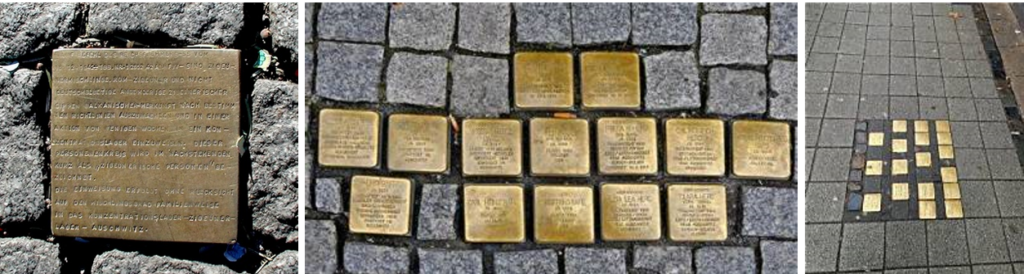
Born in 1927, William Wolff was driven out of Germany in 1933 by the rise of
Nazism; his family settled in London in 1939. He became a journalist, and then, in
1984, a rabbi — at the age of fifty-seven. In 2002, he was called to Schwerin as
Landesrabbiner [2] . In 2014, he received honorary citizenship of the city.

The synagogue of the Jüdische Gemeinde of Schwerin, built on the site of the two
synagogues destroyed in 1938, was realised at the initiative of the Jewish
community with the support of the Land [3] . Constructed in 2008 by the architects
Joachim and Matthias Brenncke [4] , it presents itself as a contemporary volume in
dark red brick, crowned by a sloping roof that opens into a skylight toward the
heavens. Excavations revealed the foundations and paving stones of 1819, now
integrated into the new building.

[1] In the diaspora, the portion read this week is Korah.
[2] The Landesrabbiner — state rabbi — is the official representative of the Jewish
community before the authorities of the Land. The post, which had existed in
Mecklenburg since the nineteenth century, had remained vacant throughout the Nazi
and Communist periods. Wolff became its first holder in more than sixty years.
[3] The financial support of the Land of Mecklenburg-Vorpommern is part of the
German policy of support for Jewish life and acknowledgment of local history, following the destruction of 1938 and the absence of reconstruction during the
Communist period.
[4] Joachim and Matthias Brenncke, architects in Schwerin, partners of the firm
Brenncke Architekten.

Kfar Etzion, Judea, Israel

Qoraḥ (קֹרַח)[1]
Numbers 16:1–18:32 • 1 Samuel 11:14–12:22

The ambitious Qoraḥ challenges the authority of Moshe and Aharon. To settle the dispute, Moshe places the staffs of the leaders of the twelve tribes in the Tabernacle. By morning, only one has blossomed. The haftara reminds us that legitimate authority is proven through deeds — not ambition.

Numbers 17:23
וַיְהִי מִמָּחֳרָת, וַיָּבֹא מֹשֶׁה אֶל־אֹהֶל הָעֵדוּת, וְהִנֵּה פָּרַח מַטֵּה־אַהֲרֹן לְבֵית לֵוִי; וַיֹּצֵא פֶרַח וַיָּצֵץ צִיץ, וַיִּגְמֹל שְׁקֵדִים.
“On the following day, Moshe entered the Tent of Testimony, and behold, the staff of Aharon, for the house of Levi, had blossomed: it had produced buds, brought forth flowers, and borne almonds.”

A staff cut from its root, presumed dead, yet blooming again — this is the very image of Kfar Etzion[2]. In the Judean hills south of Jerusalem, this kibbutz was founded in 1927, destroyed [3] several times, and finally razed on 13 May 1948 [4], on the eve of the proclamation of the State of Israel.

During the nineteen years of Jordanian occupation, the expelled families would climb the heights of Jerusalem, to the lookout point of Ramat Raḥel, from where they could glimpse in the distance the Oak of Gush Etzion [5]. After the Six-Day War[6], the descendants of the founders returned and rebuilt the kibbutz on its original site.

Today, Kfar Etzion is a religious Zionist kibbutz of about 1,200 residents. It hosts a mekhina (מכינה) [7] among the most renowned in the country, a museum recounting the history of Gush Etzion, and various educational and tourist activities. The community also operates a guesthouse complex (zimmer) for visitors. Faithful to its agricultural vocation, the kibbutz cultivates apple orchards, cherry trees, vineyards, and almond groves.


[1] The parasha read this Shabbat in the diaspora is Shelakh Lekha.
[2] The name Etzion was chosen in honor of Shmuel Zvi Holtzman (1883–1960), who acquired the land in the 1930s; the name plays on the German Holz (“wood”), linked to the Hebrew etz (עץ), “tree/wood.”
[3] The four foundations of Kfar Etzion:
1927–1929 under the name Migdal Eder (מגדל־עדר), mentioned in Genesis 35:21; destroyed during the 1929 riots.
1934–1936: the El HaHar company reestablishes the settlement; abandoned during the Arab Revolt.
1943–1948: refounded by Hapoel HaMizrachi (est. 1922), committed to the ideal “Torah and labor”; on 13 May 1948, 127 defenders were massacred after surrendering, four prisoners survived.
Since 25 September 1967: refounded by the descendants of the 1948 inhabitants.
[5] The Oak of Gush Etzion is a centuries‑old tree (600–700 years), visible from Jerusalem, and a symbol of the Gush Etzion region.
[6] Arab coalition in the Six-Day War: Egypt, Jordan, and Syria (principal belligerents), Iraq (troops in Jordan), Saudi Arabia and Kuwait (contingents), with political or logistical support from Algeria, Morocco, Sudan, and Tunisia.
[7] Mekhina: a religious and military preparatory academy for young Israelis before their service in the IDF; it combines Torah study, civic education, and physical training.

Tel Susya, Israel

Shelach Lekha [1] (שְׁלַח לְךָ – “send for yourself”)
Numbers 13:1–15:41 • Joshua 2:1–24

Twelve scouts are sent to survey the Land of Israel. Caleb and Joshua remain confident in the divine promise, but the report of the other ten causes the people to lose heart. The book of Joshua recounts in turn the sending of two spies to Jericho.

Numbers 13:23
וַיָּבֹאוּ עַד־נַחַל אֶשְׁכּוֹל וַיִּכְרְתוּ מִשָּׁם זְמוֹרָה וְאֶשְׁכּוֹל עֲנָבִים אֶחָד
“They reached the valley of Eshkol [2] and cut from there a branch with a single cluster of grapes.”

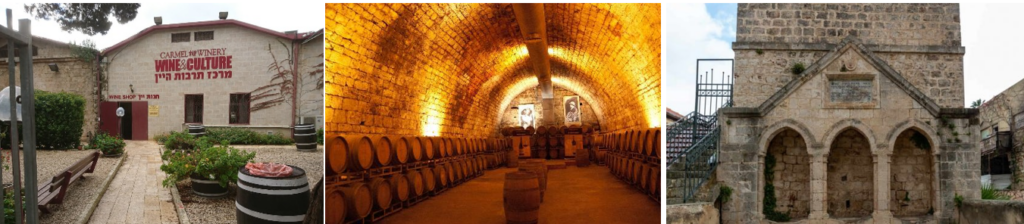
Mentioned in the biblical narrative, this valley lies in the Hebron region, south of the Judean hills. The importance of viticulture in this area has been attested since antiquity, notably at Susya. Excavations [3] have uncovered a large winepress carved into the rock, dated to the 5th or 6th century, along with several agricultural installations. Near the winepress, the remains of the Byzantine synagogue, built in the 4th century and used until the 8th, bear witness to the vitality of the Jewish community that inhabited the site during this period. The building, oriented toward Jerusalem, still preserves its mosaic floor and several Hebrew inscriptions. The ensemble illustrates the prosperity of a village where wine production played a central role in both economic and religious life. Even today, viticulture remains vibrant, sustained by renowned wines such as Hebron Heights Cabernet Sauvignon.


[1] In the diaspora, the weekly Torah portion read this week is Beha’alotekha.
[2] Eshkol (אֶשְׁכּוֹל) is a Hebrew term meaning a cluster of grapes. The word derives from a root expressing the idea of a compact grouping or tightly bound cluster, reflecting the structure of the grape cluster itself. In the Tanakh, it becomes a sign of the fertility and richness of the Land of Israel, and a symbol of abundance associated with divine blessing.
[3] Excavations carried out by Ze’ev Yeivin, Amnon Negev, and Yitzhak Magen, archaeologists affiliated with Israeli heritage institutions (including the Israel Antiquities Authority and the Civil Administration of Judea and Samaria), specialists in Byzantine‑period archaeology in Judea and in Jewish villages of that era.

Tel Beit Shemesh, Israel

Beha’alotekha [1] (בְּהַעֲלֹתְךָ– “when you cause to ascend”)
Numbers 8:1–12:16 • Zechariah 2:14–4:7

The parashah opens with the lighting of the Menorah and the institution of the service of the Levites. It continues with the account of the Passover celebrated in the wilderness [2] and the establishment of Pesach Sheni, then describes the first movements of the people, guided by the divine cloud. The Sages of the Second Temple period [3] chose this haftarah because it evokes the vision of the golden Menorah.

Numbers 8:2
בְּהַעֲלֹתְךָ, אֶת-הַנֵּרֹת, אֶל-מוּל פְּנֵי הַמְּנוֹרָה, יָאִירוּ שִׁבְעַת הַנֵּרוֹת
“When you cause the lamps to ascend, the seven lamps shall give light toward the front of the Menorah.”

Located in the fertile Sorek Valley, Tel Beit Shemesh[4] benefits from an environment particularly favorable to olive cultivation. Excavations conducted between 1990 and 2010 by Bunimovitz and Lederman [5] highlight the importance of olive‑pressing installations dating to the First Temple period (8th–7th c. BCE): massive grinding stones, collection basins, and settling vats. These discoveries confirm large‑scale oil production intended for daily use, for the regional economy, and for supplying the Temple in Jerusalem.

Research carried out at the foot of the tell also reveals an oil‑production center active under the Assyrians and later the Babylonians, showing the continuity of this activity even under foreign rule.


[1] Due to the shift created when the second day of Yom Tov fell on Shabbat. In the diaspora, the parashah read is Nasso.
[2] “Passover in the wilderness” refers to the first celebration of Passover after the Exodus, one year later, while the Israelites were encamped at Sinai (Numbers 9:1–14). It was the only Passover celebration during the forty years of wandering.
[3] The Sages of the Second Temple period (1st c. BCE – 1st c. CE): primarily the soferim (scribes) and the Pharisees, forerunners of rabbinic Judaism, who organized religious life at the end of the Second Temple era. It is during this period that the haftarah liturgy was established.
[4] Beit Shemesh appears as one of the cities assigned to the Levites (Joshua 21:16) and as a strategic location, notably in the account of the return of the Ark of the Covenant by the Philistines (1 Samuel 6:13).
[5] Shlomo Bunimovitz (1952–): Israeli archaeologist, professor at Tel Aviv University, specialist in Iron Age Judah and Judean–Philistine relations. Zvi Lederman (1948–): Israeli archaeologist at Tel Aviv University, specialist in ancient agricultural systems and the economy of oil and wine.

Young Israel of West Hartford, Connecticut

Shavuot
Ex. 19:1–20:23 • Num. 28:26–31 • Ezekiel 1:1–28 & 3:12 • Megillat Ruth
[2nd day: Deut. 14:22–16:17 • Num. 28:26–31 • Habakkuk 2:20–3:19]
Nasso (נשא – “Lift up”)[1]
Num. 4:21–7:89 • Judges 13:2–25

The readings for Shavuot include the account of the Giving of the Torah, Ezekiel’s vision of the Heavenly Chariot, and the departure of Ruth from Moab, her arrival in Bethlehem, and her gradual integration into her new home.

The readings for Nasso present the organization of the Levites, the ritual of the Sotah (a woman suspected of adultery), the laws of Naziriteship, and the Priestly Blessing. The haftarah announces the birth of Shimshon, the Nazirite.

Ruth 1:19
וַתֵּלַכְנָה שְׁתֵּיהֶם עַד־בֹּאָנָה בֵּית לָחֶם
“The two of them walked on until they came to Bethlehem.”

Jews arrived in Hartford as early as the 19th century, and gradually moved during the 1950s–1960s to the neighboring city of West Hartford. From this migration emerged a Modern Orthodox[2] nucleus that eventually formed the Young Israel[3] community.

An ‘eruv[4] ḥatserot, inspected every Friday, encompasses the neighborhoods surrounding the Young Israel of West Hartford synagogue. The contemporary‑style building stands within a quiet, tree‑lined residential environment.


[1] In the diaspora, when Shavuot lasts two days and the holiday falls on a Friday (Yom Shishi), the reading of Nasso is shifted by one week compared to the calendar in Israel.
[2] Modern Orthodox: A stream of North American Orthodox Judaism combining halakhic observance with active engagement in broader society.
[3] Young Israel: A network of Orthodox synagogues founded in the United States in 1912, historically associated with Ashkenazi Modern Orthodox communities.
[4] The ‘eruvin:
Eruv ḥatserot — Allows carrying objects on Shabbat within a defined shared domain (Mishnah Eruvin 6–7; Bavli Eruvin 71a–82b; Shulḥan Arukh, OḤ 366–370).
Eruv techumin — Establishes the permitted walking boundary around a town up to 2,000 cubits (Mishnah Eruvin 4:3; Shulḥan Arukh, OḤ 397).
Eruv tavshilin — Allows Shabbat preparations to be performed on a Yom Tov that falls on Friday (Bavli Beitza 15b; Shulḥan Arukh OḤ 527).
Simplified procedure: prepare two cooked foods, recite the berakhah of the eruv, then consume them on Shabbat, preferably at se‘udah shelishit (OḤ 527:2, 527:12, 527:14; Mishnah Berurah 527:48; Kaf Haḥayim 527:48).

Ksar of Amezrou, Morocco

Bamidbar (במדבר / Ba‑Midbar, “In the Desert”)
Numbers 1:1–4:20 • Hosea 2:1–22 • Pirkei Avot, chap. 6 (Perek Kinyan Torah [1])

In the desert, Moses conducts the census of Israel, organizes the placement of the tribes around the sanctuary, and entrusts the Levites with their responsibilities. The desert is not only a place of passage: it becomes the space where the people are structured and receive a collective mission. The prophet Hosea evokes the desert as a place of return and of rediscovered speech. It is in this stripped‑down space that a bond can be repaired.

Hosea 2:16 [2]
לָכֵן הִנֵּה אָנֹכִי מְפַתֶּיהָ וְהֹלַכְתִּיהָ הַמִּדְבָּר וְדִבַּרְתִּי עַל־לִבָּהּ
“Therefore, here I am: I will allure her, I will lead her into the desert, and I will speak to her heart.”

At the entrance to the desert, in the ksar of Amezrou, near Zagora, this fortified village—historically linked to Saharan caravan routes [3]—once housed a rural and oasis‑dwelling Jewish community of southern Morocco, belonging to what can be described as Judeo‑Berber Judaism[4].

Throughout the Drâa Valley, silversmithing and jewelry‑making[5], practiced notably by Jewish artisans, were traditional local activities.

In the early 1960s, the Jews gradually left Amezrou for Israel, in the context of post‑independence Morocco. The departure of the last families took place around 1962–1963.

The Amezrou synagogue, built of rammed earth (pisé), still stands today at the heart of the ksar, in the former mellah. Its Aron ha‑Kodesh is carved into the eastern wall, and its roof rests on palm‑tree beams, following traditional techniques.

[1] Kinyan Torah (קניין תורה), “acquisition of the Torah,” is the traditional name given to chapter 6 of Pirkei Avot. This chapter emphasizes the value of Torah study and the dispositions through which it is acquired, notably the list of the forty‑eight ways of acquiring the Torah.
[2] Use of the feminine: Hosea uses the image of the wife to express the relationship between God and Israel.
[3] Historical context: The ksar of Amezrou is part of the system of fortified villages of southern Morocco, developed along Saharan caravan routes. These structures shaped settlement, trade, and communal life among oasis populations—Muslim and Jewish—in the Drâa Valley.
[4] The expression Judeo‑Berber refers to the diversity of Jewish communities of the Maghreb who lived in Berber‑speaking environments.
[5] Silversmithing and jewelry‑making are attested as traditional activities of the Drâa Valley, historically associated with the Jewish presence in the region’s ksour.

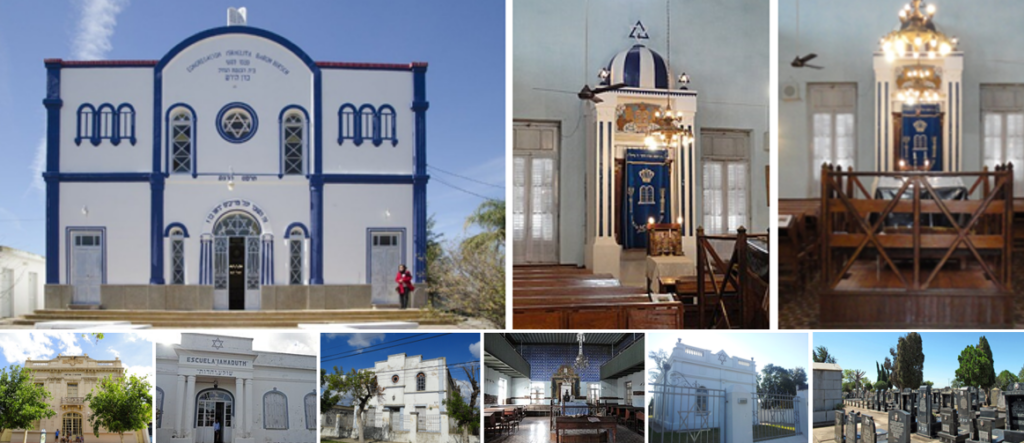
La Paz, Bolivia

Behar – Be’hukotai
(בְּהַר – בְּחֻקֹּתַי / On the mountain – According to My statutes)
Leviticus 25–27 • Haftarah: Jeremiah 16,19 – 17,14 Pirkei Avot, chapter 5

God speaks “on the mountain,” revealing laws concerning the land, rest, and social justice. He promises that if Israel walks in His ways, He will lead it forward in elevation and dignity. The prophet Jeremiah affirms that even in exile, the promise of the land endures.

Leviticus 26:13
וָאוֹלֵךְ אֶתְכֶם קוֹמְמִיּוּת
“I made you walk in uprightness and elevation.”

La Paz lies in a steep valley of the Andes Cordillera, dominated by the silhouette of Mount Illimani [1]. The Círculo Israelita de Bolivia synagogue is widely cited as the highest synagogue in the world, located at approximately 3,650 meters above sea level.

Jewish presence in Bolivia is attested prior to the twentieth century (with conversos in the sixteenth and seventeenth centuries), but the community took shape primarily from 1938 onward, when Bolivia opened its borders to Jewish refugees fleeing Nazi persecution. According to historian Leo Spitzer[2], several thousand Jewish refugees arrived in the country between the late 1930s and the early 1940s, laying the foundations of a structured communal life through the creation of religious, educational, and cultural institutions.

After reaching a peak in the 1950s, the Bolivian Jewish community experienced steady emigration to Israel and the Americas. Today, only a small core remains[3], mainly in La Paz and Santa Cruz.


[1] Illimani is a name of Aymara origin. Aymara, together with Spanish and Quechua, is one of Bolivia’s three official languages. The name is commonly interpreted as “mountain of light / protective spirit of light,” in reference to the reflection of sunlight on its eternal snows, though other interpretations evoke the image of a luminous condor.
[2] Leo Spitzer, Hotel Bolivia: The Culture of Memory in a Refuge from Nazism, Hill & Wang, 1998. Estimates of the number of Jewish refugees welcomed by Bolivia between 1938 and the early 1940s vary by source; Spitzer, drawing on testimonies and contemporary documents, suggests a total that may have reached nearly twenty thousand people.
[3] The Times of Israel, “In La Paz, Bolivia, a Symbol of Jewish Resilience,” October 5, 2024. The article describes the current life of the Círculo Israelita de Bolivia and highlights the vitality of a community that is now small but active.