Qoraḥ (קֹרַח) [1]
Numbers 16:1–18:32 • 1 Samuel 11:14–12:22
The ambitious Qoraḥ challenges the authority of Moshe and Aharon. To settle the dispute, Moshe places the staffs of the leaders of the twelve tribes in the Tabernacle. By morning, only one has blossomed. The haftara reminds us that legitimate authority is proven through deeds — not ambition.
Numbers 17:23
וַיְהִי מִמָּחֳרָת, וַיָּבֹא מֹשֶׁה אֶל־אֹהֶל הָעֵדוּת, וְהִנֵּה פָּרַח מַטֵּה־אַהֲרֹן לְבֵית לֵוִי; וַיֹּצֵא פֶרַח וַיָּצֵץ צִיץ, וַיִּגְמֹל שְׁקֵדִים.
“On the following day, Moshe entered the Tent of Testimony, and behold, the staff of Aharon, for the house of Levi, had blossomed: it had produced buds, brought forth flowers, and borne almonds.”
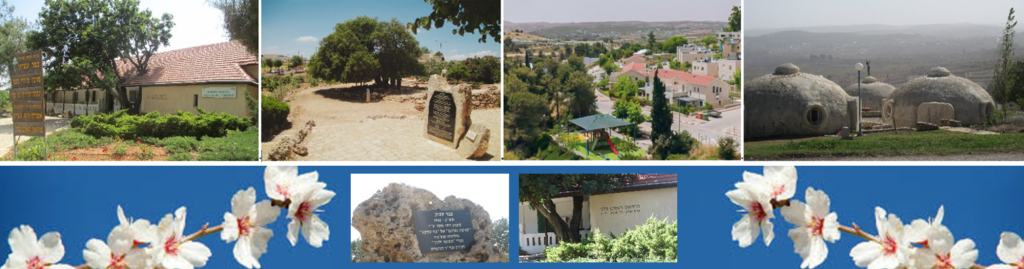
A staff cut from its root, presumed dead, yet blooming again — this is the very image of Kfar Etzion [2]. In the Judean hills south of Jerusalem, this kibbutz was founded in 1927, destroyed [3] several times, and finally razed on 13 May 1948 [4], on the eve of the proclamation of the State of Israel.
During the nineteen years of Jordanian occupation, the expelled families would climb the heights of Jerusalem, to the lookout point of Ramat Raḥel, from where they could glimpse in the distance the Oak of Gush Etzion [5]. After the Six-Day War [6], the descendants of the founders returned and rebuilt the kibbutz on its original site.
Today, Kfar Etzion is a religious Zionist kibbutz of about 1,200 residents. It hosts a mekhina (מכינה) [7] among the most renowned in the country, a museum recounting the history of Gush Etzion, and various educational and tourist activities. The community also operates a guesthouse complex (zimmer) for visitors. Faithful to its agricultural vocation, the kibbutz cultivates apple orchards, cherry trees, vineyards, and almond groves.
[1] The parasha read this Shabbat in the diaspora is Shelakh Lekha.
[2] The name Etzion was chosen in honor of Shmuel Zvi Holtzman (1883–1960), who acquired the land in the 1930s; the name plays on the German Holz (“wood”), linked to the Hebrew etz (עץ), “tree/wood.”
[3] The four foundations of Kfar Etzion:
— 1927–1929 under the name Migdal Eder (מגדל־עדר), mentioned in Genesis 35:21; destroyed during the 1929 riots.
— 1934–1936: the El HaHar company reestablishes the settlement; abandoned during the Arab Revolt.
— 1943–1948: refounded by Hapoel HaMizrachi (est. 1922), committed to the ideal “Torah and labor”; on 13 May 1948, 127 defenders were massacred after surrendering, four prisoners survived.
— Since 25 September 1967: refounded by the descendants of the 1948 inhabitants.
[5] The Oak of Gush Etzion is a centuries‑old tree (600–700 years), visible from Jerusalem, and a symbol of the Gush Etzion region.
[6] Arab coalition in the Six-Day War: Egypt, Jordan, and Syria (principal belligerents), Iraq (troops in Jordan), Saudi Arabia and Kuwait (contingents), with political or logistical support from Algeria, Morocco, Sudan, and Tunisia.
[7] Mekhina: a religious and military preparatory academy for young Israelis before their service in the IDF; it combines Torah study, civic education, and physical training.