Etz Chaim, Volozhin, Belarus

1803

Devarim (דְּבָרִים — Words)
Shabbat Chazon (שַׁבָּת חֲזוֹן – Shabbat of the Vision)
Deut. 1:1–3:22 • Isaiah 1:1–27

Before entering Canaan, Moses recounts Israel’s journey through the desert and transmits the Torah to the new generation. In the haftarah, Isaiah opens his book with a vision in which God denounces the sins of Jerusalem and announces the judgment that threatens it — a prelude to purification and renewal.

Deut. 1:5
הוֹאִיל מֹשֶׁה בֵּאֵר אֶת הַתּוֹרָה הַזֹּאת
“Moses set out to explain this Torah.”

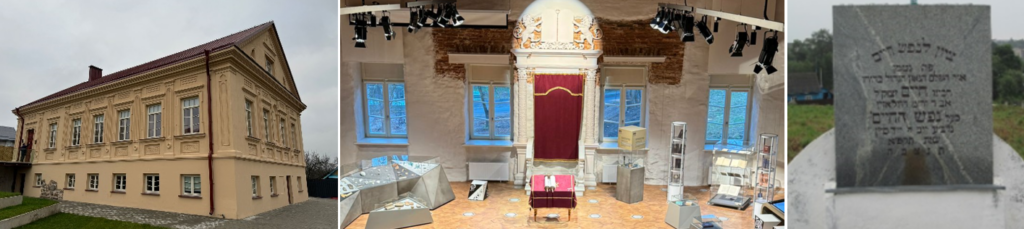
To explain the Torah, to make it intelligible: this is also the aim of Rabbi Chaim of Volozhin[1] when he founded the Etz Chaim yeshiva[2] in 1803. He developed a method of study that emphasizes the plain meaning (peshat)[3] of the text and its rigorous analysis.

In the 1880s–1890s, Tsar Alexander III imposed a policy of Russification and new state‑imposed requirements for the curriculum[4]. Rabbi Naftali Tzvi Yehuda Berlin[5], then head of the yeshiva, refused to comply. After nearly a century of activity, the institution closed in 1892. It reopened in 1899 on a smaller scale and continued operating until the destruction of the Jewish community[6] by Nazi Germany during the Shoah.

Returned to the Jewish community in 1989 and entrusted in 2000 to the Union of Religious Jewish Communities of Belarus, the building was restored beginning in 2008 thanks to support from several organizations[7]. Now open as a museum dedicated to the memory of Litvak (Lithuanian) Jewry, it is part of the Belarus Jewish Heritage Trail, a heritage route highlighting major Jewish memory sites in the country.


[1] Rabbi Chaim ben Yitzchak of Volozhin (1749–1821) studied under the Shaagas Aryeh and then under Raphael ha‑Kohen Hamburger (1722–1803), chief rabbi of Vilna. At twenty‑five, he became the principal disciple of the Vilna Gaon (1720–1797), whom he accompanied until his death. His major work, Nefesh ha‑Chaim, presents a structured theology of Torah, prayer, and the fear of God.
[2] When the yeshiva opened, Rabbi Chaim supported about ten students from his own funds. In 1804, he launched an appeal for donations to help the school grow. Within twenty years, enrollment rose from a handful to several hundred students, and the institution became the “mother of Lithuanian yeshivot,” a model for Mir, Slobodka, Telz, Kelm, and Ponevezh.
[3] Peshat, the plain meaning, is the first of the four traditional levels of interpretation, along with remez (allusion), derash (homiletical reading), and sod (hidden dimension). This initial focus on peshat characterizes the Volozhin method, which prioritizes analytical study of the text before homiletical or mystical readings.
[4] In 1891, Minister of Education Ivan Delyanov imposed new conditions on the curriculum: secular studies had to take place from 9 a.m. to 3 p.m., teachers had to hold state diplomas, and nighttime study in the yeshiva was forbidden. These measures effectively eliminated the time available for religious study.
[5] Rabbi Naftali Tzvi Yehuda Berlin (1816–1893), known as the Netziv (נצי״ב), led the Volozhin yeshiva during the second half of the 19th century. He married Rayna Batya Volozhiner, granddaughter of Rabbi Chaim of Volozhin. His leadership left a lasting mark on the institution, and Rabbi Avraham Yitzchak ha‑Cohen Kook, a student in Volozhin in the 1880s, acknowledged the decisive influence of the Netziv on his formation.
[6] Before the war, about half of Volozhin’s population was Jewish — nearly 3,000 people on the eve of the Shoah. During the German occupation in 1941, a ghetto was established, followed by mass executions and the near‑total liquidation of the community in 1942.
[7] World Monuments Fund (WMF): an international organization based in New York specializing in the preservation of endangered historic sites. Yad Yisroel: an Orthodox Jewish organization active in Eastern Europe, particularly Belarus and Ukraine. Agudath Israel: an American Orthodox Jewish organization involved in education and community support. The Union of Religious Jewish Communities of Belarus (URJCB) is the official body managing synagogues, memorial sites, and Jewish religious institutions in Belarus.

Al‑Ula, Saudi Arabia

Matot–Massé (מַטּוֹת–מַסְעֵי — Tribes – Journeys)
Numbers 30:2–36:13 • Irmyahou (Jeremiah) 2:4–28; 3:4

Matot deals with vows, then with the war against Madyan and the division of the territories located east of the Jordan. Massé recounts the forty‑two stages of the wilderness journey, sets the boundaries of Canaan, establishes the cities of refuge, and concludes with the inheritance of the daughters of Tselof’had. In the haftara[1], the prophet Irmyahu calls Israel to return to God and denounces the breach of the Covenant that has weakened the people.

Numbers 31:2[2]
 
נְקֹם נִקְמַת בְּנֵי־יִשְׂרָאֵל מֵאֵת הַמִּדְיָנִים
“Carry out the vengeance of the children of Israel upon the Madyanites.”

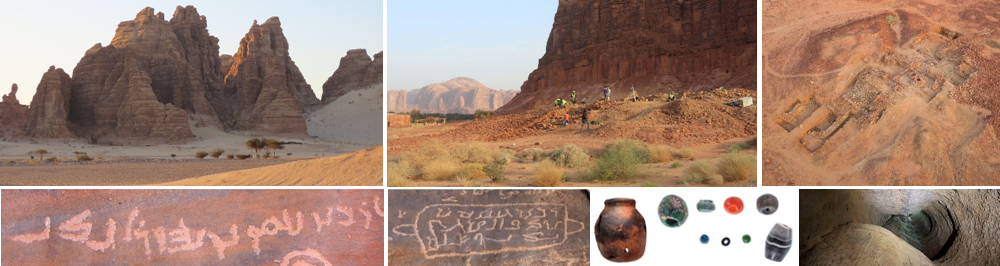
Ancient sources[3] place the territory of the Madyanites in the northwest of present‑day Saudi Arabia, around the Wadi al‑Qurā (Valley of the Villages). It was in the heart of this region that, in 2019, Franco‑Saudi excavations[4] uncovered, in the city of Al‑‘Ula (The Sublime), a settlement occupied between the 3rd and 7th centuries CE. Domestic refuse pits yielded sheep and goat bones, but no camel remains[5], despite the animal’s omnipresence in the region. Nabatæan inscriptions bearing Jewish names[6] corroborate the existence of a Jewish community established in this valley. The site was abandoned at the beginning of the 7th century, but a new settlement was immediately built nearby. Medieval Hebrew inscriptions — distinct from the earlier Nabatæan inscriptions — attest to a Jewish presence[7] still documented there until the 10th century.

[1] The haftara belongs to the cycle of tlata de‑puranuta (תלתא דפורענותא), an Aramaic expression meaning “the three admonitions.” This cycle designates the three haftarot read on the three Sabbaths preceding Tisha be‑Av (Irmyahu 1–2; Irmyahu 2–3; Yeshayahu 1), independently of the content of the parasha.
[2] נִקְמַת בְּנֵי־יִשְׂרָאֵל (nikmat bene Israel), “the vengeance of the children of Israel.” In the following verse (Numbers 31:3), when Moshe conveys this command to the people, the expression becomes נִקְמַת־ה׳ (nikmat Hashem), “the vengeance of the Eternal.” Rashi explains this shift: whoever attacks Israel attacks the Holy One, blessed be He; the vengeance of Israel and that of God are therefore inseparable.
[3] Madyan is identified in Jewish sources — Onkelos (Targum, 2nd century) and Flavius Josephus (Jewish Antiquities, 1st century) — in Greek sources — Ptolemy (Geography, 2nd century) and Strabo (Geography, 1st century BCE) — as well as in medieval Arabic sources — al‑Ya‘qūbī (Kitāb al‑BuldanBook of the Lands, 9th century), al‑Muqaddasī (Aḥsan al‑TaqāsīmThe Best Division of the Provinces, 10th century), and Yāqūt al‑Ḥamawī (Mu‘jam al‑BuldanDictionary of Places, 13th century). All locate Madyan in the northwest of Arabia, around Tabūk, the Gulf of Aqaba, and the Wadi al‑Qurā — corresponding to the present‑day region of Al‑‘Ula.
[4] Excavations conducted by archaeologists Jérôme Rohmer (France) and Abdulrahman Alsuhaibani (Saudi Arabia), in collaboration with teams from the CNRS (French National Centre for Scientific Research), AFALULA (French Agency for the Development of Al‑‘Ula), and the RCU (Royal Commission for AlUla). The results were published in Arabian Archaeology and Epigraphy, 2025.
[5] The dromedary and the camel are classified among impure animals (Leviticus 11:4; Deuteronomy 14:7). Their presence in the region is massive from antiquity onward, but their absence from the refuse pits of Al‑‘Ula suggests dietary practices consistent with biblical prescriptions.
[6] The Nabatæan inscriptions discovered on ostraca and architectural blocks — written from right to left — bear Jewish anthroponyms such as ʾnny bn ywsf (ענני בן יוסף, Anani ben Yosef) or nhmy bn ydy (נחמי בן ידי, Neḥami ben Yadi), corroborating other evidence of a Jewish community established in the valley of the Wadi al‑Qurā.
[7] Medieval Arabic geographers — notably al‑Ya‘qūbī — preserve the memory of an ancient Jewish presence in the region of the Wadi al‑Qurā. Medieval Hebrew inscriptions, found at a nearby site in Al‑‘Ula and distinct from the earlier Nabatæan inscriptions, attest to a Jewish presence in this region until the 10th century.

Musmeah Yeshua, Rangoon, Burma

1896

Pinchas (פִּינְחָס)
Numbers 25:10–30:1 • 1 Kings 18:46–19:21

The parasha recounts how Pinchas acts with a zeal that earns him the covenant of an everlasting priesthood, passed down to his descendants, while the haftarah shows Elijah, exhausted yet likewise filled with fervent zeal, receiving from God the strength to continue his mission and appoint Elisha as his successor.

1 Kings 19:16
 …
וְאֶת־אֱלִישָׁע בֶּן־שָׁפָט מֵאָבֵל מְחוֹלָה, תִּמְשַׁח לְנָבִיא תַּחְתֶּיךָ.
“And Elisha son of Shaphat, from Avel‑Meholah, you shall anoint as prophet in your stead.”

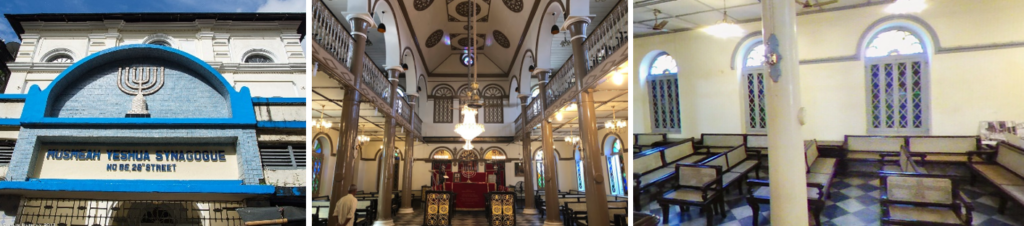
In 1978, Isaac Samuels, guardian of the Musmeah Yeshua Synagogue (משמיע ישועה – “He Who Makes Salvation Heard”), in the heart of old Rangoon (Yangon), in Burma (Myanmar), entrusted his son Moses with the responsibility of watching over the synagogue and made him promise never to abandon it. Moses kept this promise, and upon his death in 2015, his son Sammy naturally assumed the stewardship of the place[1], together with his sisters Dina and Kaznah.

It is the only synagogue[2] in the country , inaugurated in 1896. Its style blends British colonial architecture with Sephardi tradition, featuring rattan benches suited to the tropical climate and a dome painted in blue and white. It once served a prosperous Jewish community[3], which owned 126 Torah scrolls, of which only two remain today.

Following the Japanese invasion, and later with the establishment of the military regime [4], the community gradually dispersed, family by family, until only about twenty Jews remain in the country today.

[1] Testimonies from the Samuels family, collected in reports devoted to the Musmeah Yeshua Synagogue (notably Jerusalem Post and Haaretz, as well as the Jewish Telegraphic Agency (JTA) dispatch of April 29, 2015 announcing the death of Moses Samuels). The story is also documented in the film The Last Synagogue of Yangon, directed by Maya Ben‑Dor, and in the work of Ruth Levy, historian of Jewish communities in Southeast Asia, and Graham Harvey, British anthropologist specializing in religious minorities.
[2] An earlier wooden synagogue was built in 1854.
[3] The Jewish community of Burma numbered around 2,500 people in 1940, making it one of the largest in Southeast Asia. It consisted mainly of Baghdadi Jews who had arrived from Iraq in the 18th–19th centuries and settled in Calcutta and Bombay, along with several Bene Israel families — a very old community from the Konkan coast (Bombay), combining Middle Eastern Jewish and Indian ancestry — as well as Jews from Cochin, established since the 15th century in Kerala, bearers of Sephardi and Yemenite traditions.
[4] The Japanese invasion of 1942 led to the evacuation of most of Rangoon’s Jews to British India. Later, the establishment of the military regime in 1962 brought political and economic isolation that accelerated the exodus of the Jewish community and other minorities. The country remains today under the authority of a military junta, the result of yet another coup d’État (2021), maintaining an authoritarian regime and strict control over political life.