Sheba Medical Center, Ramat Gan

Vayera (וירא – And He Appeared)
Genesis 18:1–22:24; II Kings 4:1–37 (Sephardim: 4:1–23)

Avraham is recovering from his circumcision when G-d comes to visit him [1]. Three men appear before him and announce that within a year Sarah, aged 90, will have a son. G-d had closed every womb of the household of Avimelekh [2]; Avraham prays for it, and G-d answers him. Hagar is sent away at SVayera is filled with wombs that close and open. Sarah gives birth to Yitzhak, the household of Avimelekh comes back to life, and the Shunammite embraces her son. In the midst of these births, healing appears: one man prays for another [3].

Genesis 20:17
וַיִּתְפַּלֵּל אַבְרָהָם אֶל־הָאֱלֹהִים וַיִּרְפָּא אֱלֹהִים אֶת־אֲבִימֶלֶךְ וְאֶת־אִשְׁתּוֹ וְאַמְהֹתָיו וַיֵּלֵדוּ

“Avraham prayed to G-d, and G-d healed Avimelekh, his wife and his maidservants, and they bore children.”

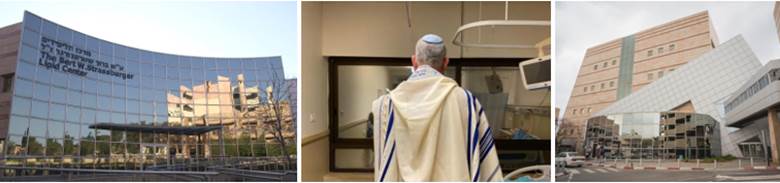
On Tel HaShomer hill [4], named after the organization of Jewish watchmen founded in 1909 in the Galilee, a forerunner of the Haganah, stands Sheba Medical Center [5]. In 1948, the IDF Medical Corps, then headed by Chaim Sheba, took over the hospital of the camp the British army had just abandoned, to treat the wounded of the War of Independence.

Today, doctors and researchers keep watch there day and night to rebuild organs [6], fight infertility [7] and bring healing.

This work, driven by its innovation center ARC, earned Sheba sixth place among the world’s “smart” hospitals in the October 2026 ranking by Newsweek and Statista [8]. It is the only Israeli institution in the top 10.

[1] Bikur cholim, visiting the sick. According to Rashi (18:1, based on Bava Metzia 86b), it was the third day after the circumcision, the most painful one, and G-d came to inquire after Avraham’s health. Rabbi Chama bar Chanina derives the rule: “The Holy One, blessed be He, visited the sick, as it is written: ‘Hashem appeared to him by the oaks of Mamre.’ You too, visit the sick” (Sotah 14a). The Tur (Yoreh De’ah 335) bases the mitzvah of bikur cholim on this verse.

[2] The verse (Genesis 20:18) doubles the verb: עָצֹר עָצַר, “closing, He closed.” According to Rabbi Elazar (Bava Kamma 92a), the man suffered a single closure, the woman two: conceiving and giving birth. Even the hens of the household stopped laying. Rashi goes further: the closure affected כְּנֶגֶד כָּל פֶּתַח, every opening of the body, and וַיֵּלֵדוּ is in the masculine plural, “they bore,” not the feminine: according to the Targum, it means here “they were relieved,” as their orifices reopened. The healing therefore concerns Avimelekh himself. The same Talmudic passage derives a rule: one who prays for another while needing the same thing is answered first. And immediately afterward: “And Hashem remembered Sarah” (21:1). According to Yevamot 64b, Sarah did not even have a womb (אֲפִילּוּ בֵּית וָלָד אֵין לָהּ): her pregnancy was a creation rather than a healing.

[3] The 8th blessing of the Amida, Refa’enu, takes up in the plural Jeremiah 17:14: רְפָאֵנִי ה’ וְאֵרָפֵא, “Heal me, Hashem, and I shall be healed.” Why is healing the 8th blessing? Rabbi Acha answers: מתוך שניתנה מילה בשמינית שצריכה רפואה, לפיכך קבעוה בשמינית, “since circumcision was given for the eighth day, and it requires healing, healing was placed in the eighth” (Megillah 17b). And Vayera opens with Avraham recovering from his circumcision. According to Rashi (18:2, based on Bava Metzia 86b), one of the three visitors, the angel Raphael, “G-d heals,” came to heal him.

[4] The name of the hill recalls the Jewish watchmen of 1909, but the word goes back further. The Psalmist promises: “He neither slumbers nor sleeps, the Guardian of Israel” (Psalms 121:4).

[5] Chaim Sheba, born Scheiber in 1908 in Frasin, Bukovina, headed the IDF Medical Corps from 1948 to 1950. He directed the hospital from 1953 until his death in 1971, after which the hospital was named after him.

[6] In 2025, Prof. Benjamin Dekel’s team grew miniature kidneys from stem cells. They lived 34 weeks, reproducing step by step the growth of the kidney in the womb (B. Dekel et al., The EMBO Journal, 2025; Times of Israel, August 5, 2025).

[7] In 2008, Ayelet Rozenberg, 21, learns that she has lymphoma. Before chemotherapy, which threatens her fertility, Prof. Dror Meirow’s team removes and freezes part of her ovarian tissue, then reimplants it once she has recovered. She has since given birth to four sons, a world first (Sheba Medical Center, “Ayelet’s Miracle”; JNS, “Four little miracles,” January 3, 2023).

[8] Newsweek/Statista, World’s Best Smart Hospitals 2027. Sheba was 9th in the 2026 edition. ARC (Accelerate, Redesign, Collaborate), launched in November 2019, brings together doctors, researchers and start-ups on the campus.arah’s request. Wandering in the desert, she moves away from her son Ishmael so as not to watch him die of thirst, but G-d opens her eyes, and she sees a well. In the haftarah, Elisha tells a barren woman of Shunem that she will embrace a son.

Esther Cinema, Netanya, Israel

1936–2024

Lekh Lekha (לֶךְ־לְךָ – “Go for yourself” or “Go to yourself”)
Bereshit 12:1-17:27; Yeshayahu 40:27-41:16

In the Parashah, G-d commands Avram to leave his homeland and journey toward a land that He will show him. In the Haftarah, the prophet Yeshayahu addresses a discouraged Israel in exile and reminds it that it is descended from Avraham, the friend of G-d, and that G-d will give it the strength to continue on its way.

Bereshit 12:1
לֶךְ־לְךָ מֵאַרְצְךָ וּמִמּוֹלַדְתְּךָ וּמִבֵּית אָבִיךָ אֶל־הָאָרֶץ אֲשֶׁר אַרְאֶךָּ

“Go forth from your land, from your birthplace and from your father’s house, to the land that I will show you.”

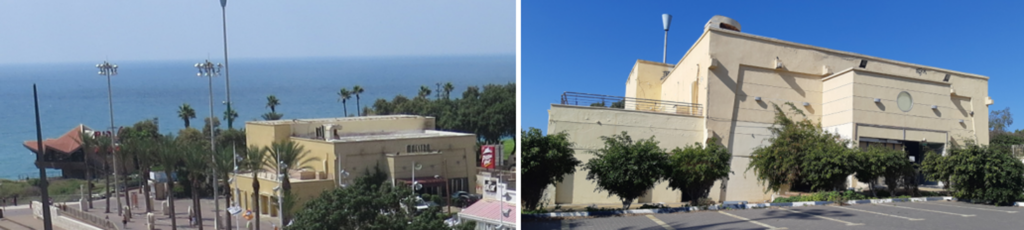
In 1936, Netanya, a small agricultural town founded in 1929, opened an 800-seat cinema. Located a short distance from the sea, on Independence Square, it became the city’s first cultural center. Its basement served as the first refuge for the ma’apilim.[1] After a screening, they would leave the theater mingled with the audience in order to escape inspections by the British authorities charged with preventing Jewish immigration. They were then transferred to other locations, where they hoped to build a new life.

Between 1937 and 1940, Sironit-Herzl Beach in Netanya was an important landing point[2] for the Aliyah Bet.[3] The ma’apilim, men, women and children, left their native countries to reach Eretz Israel. They landed at night before being led to the Esther Cinema.

Unable to compete with modern multiplexes, the theater gradually lost its audience and closed in the early 1990s. In March 2024, the Esther Cinema, a refuge for those who came to build their lives in Eretz Israel, was demolished.[4] A hotel, shops and residential buildings are to be built on the site.[5]

With its disappearance, the city loses part of its history. A gallery intended to recall this past has been announced, a pale reminder of such a remarkable chapter, one that deserved a true place of remembrance.


[1] The Hebrew term ma’apilim (מעפילים) means “those who go up” and refers to Jews who entered Eretz Israel clandestinely. Derived from the root עפל, the term refers more specifically to immigrants who entered Eretz Israel without the authorization of the Mandatory authorities.
It is the verb used in Bamidbar 14:44, when men ascend the mountain despite Moshe’s prohibition.
The Parashah Lekh Lekha also employs the verb “to go up” (עלה), from which the term aliyah, immigration to Eretz Israel, is derived: “Avram went up from Egypt, he, his wife, all that he possessed, and Lot with him, toward the Negev” (Bereshit 13:1).

[2] According to Rabbi Ervin Birnbaum (1930-2024), a witness to the Aliyah Bet, a passenger aboard the Exodus in 1947, and the author of numerous studies on clandestine Jewish immigration, as cited by ESRA magazine, Netanya played a central role in organizing clandestine immigration. His wife, Hadassa Birnbaum, reported that the owner of a nearby kiosk would offer drinks to British officers in order to divert their attention. Local residents then carried the ma’apilim on their backs from the beach to the cinema.

[3] Aliyah Bet refers to the organized immigration that took place between 1934 and 1948 outside the quotas imposed by the British Mandate authorities. The newcomers landed mainly along the coast, often at night, before being hidden and later distributed among various localities.

[4] The demolition of the Esther Cinema began in March 2024, a few days after the re-election of Mayor Miriam Feirberg-Ikar (1951-2025), who had held office since 1998.
In 2006, Tras Investments acquired the site for 28 million shekels.
In 2009, an agreement with the municipality provided for the reconstruction of the cinema, together with a museum dedicated to the history of Netanya and a tourist information office.
In 2015, the reconstruction project was transformed into a demolition project and sparked a campaign in favor of preserving the building.
From 2017 to 2021, the real estate project was approved and subsequently revised; the final decision authorized the construction of a tower on the site of the cinema.

[5] The Esther project includes a five-star hotel with 150 rooms, 58 luxury apartments, shops, and a memorial space intended to recall the history of the vanished cinema.

Ahrida Synagogue, Istanbul, Turkey

Noach
Genesis 6:9-11:32; Isaiah 54:1-55:5 (Sephardim: 54:1-10)

G-d commands Noach to build an ark to preserve his family and representatives of every animal species from destruction. For forty days and forty nights, rain pours down on the earth and the waters cover everything. When the waters finally recede, a new humanity can be born. G-d then promises that such a flood will never again destroy the earth, and seals His covenant with the sign of the rainbow[1]. The prophet Isaiah recalls the eternal covenant between G-d and Israel by invoking the “waters of Noach.”

Genesis 6:14
עֲשֵׂה לְךָ תֵּבַת עֲצֵי־גֹפֶר
“Make yourself an ark of gopher wood.” [2]

The Ahrida Synagogue was founded in the 15th century by Romaniote Jews originating from Ohrid, in North Macedonia, and is one of the oldest synagogues in Istanbul. Located in the historic district of Balat, it was rebuilt after a fire in the late 17th century. At the center of the prayer hall stands a tevah[3] in the shape of a ship. It has a rounded hull, painted yellow and outlined in red, an openwork balustrade, and a raised stern topped by a small canopy, which recalls a ship’s quarterdeck.

During the Torah reading, the person called up ascends to a tevah that recalls the one that protected its occupants from the Flood, between the waters above and the waters below[4]. The water that destroys is also the water that gives life, and Jewish liturgy[5] makes it a source of blessing.

[1] Upon seeing a rainbow, halakha prescribes reciting a blessing that recalls the Covenant made with Noach: “Blessed are You, L…, King of the universe, who remembers the Covenant, is faithful to Your Covenant, and fulfills Your word” (Berakhot 59a; Shulchan Aruch, Orach Chayim 229:1). However, it is forbidden to gaze at a rainbow for long, because the prophet Ezekiel compares its appearance to that of the Divine Glory (Ezekiel 1:28; Chagigah 16a; Shulchan Aruch, Orach Chayim 229:1).
[2] Gopher (a biblical hapax), an unidentified type of wood. Tradition understands it as a resinous, rot-resistant wood, such as cedar or cypress (Rashi; Onkelos). The midrash reads a wordplay with gofrit (sulfur/bitumen), recalling the waterproofing coating mentioned immediately afterward: “you shall coat it with bitumen”
[3] The tevah (Hebrew: תיבה) designates, in Sephardic communities, the platform from which the Torah is read. In the Torah, this word is used for only two rescues by water: Noach’s ark, and the bitumen-coated reed basket in which Moses is placed on the Nile (Exodus 2:3).
[4] The waters: On the second day of Creation, G-d separates the waters above from the waters below (Genesis 1:6-7). At the time of the Flood, everything is reversed: “all the fountains of the great deep burst forth and the windows of the heavens were opened” (Genesis 7:11).
[5] In all the Amidot, starting from the Musaf of Shemini Atzeret, the wind and rain are mentioned (Mashiv haRuach umorid hagashem). However, the request for dew and rain as a blessing (VeTen Tal uMatar liVrakha) is made only from the evening of 7 Cheshvan in Israel, in order to give Sukkot pilgrims time to return home (Ta’anit 10a; Shulchan Aruch, Orach Chayim 117:1). In 2026, the request begins immediately after the end of Shabbat Noach. In the diaspora, one follows the Talmudic calculation of sixty days after the autumn equinox (tekufat Tishrei), that is, the evening of December 4, 2026.

Gihon Synagogue, Jikwoyi, Nigeria

2005

Bereishit: Shabbat Machar Chodesh
(בראשית – שבת מחר חודש – “In the Beginning” – tomorrow is the New Moon)
Bereishit 1:1-6:8; I Samuel 20:18-42

God creates the world in six days, then ceases His work and sanctifies the seventh day. He places the man and the woman in the Garden of Eden, from which they are expelled after eating from the Tree of Knowledge. The narrative then recounts Cain’s murder of Abel, the ten generations separating Adam from Noah, and the growing corruption of humanity, amidst which Noah alone finds favor in the eyes of God.

Bereishit 2:13
וְשֵׁם־הַנָּהָר הַשֵּׁנִי גִּיחוֹן הוּא הַסּוֹבֵב אֵת כׇּל־אֶרֶץ כּוּשׁ
“The name of the second river is Gihon; it is the one that encircles the entire land of Cush.”

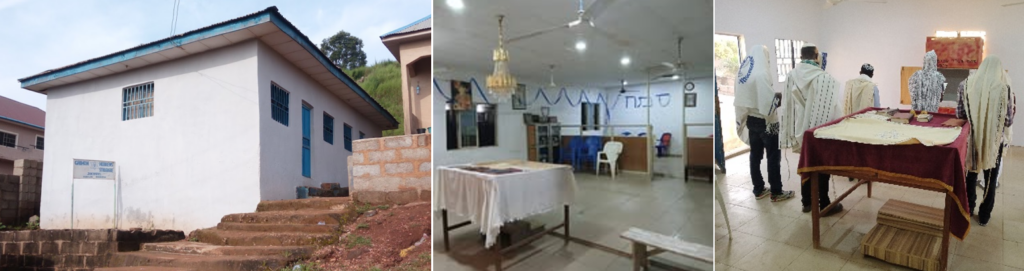
In Jikwoyi, a suburb of Abuja, the federal capital of Nigeria, stands Gihon Synagogue[1] a modest building located beside an unpaved road among homes and small shops. The community was founded during the 1990s by Igbo[2] Jews who had come from southeastern Nigeria. The land was purchased around 2002 through a community fundraising effort, and the building was completed in 2005. The prayer hall is a simple rectangular structure measuring approximately 7 by 12 meters.

Every Shabbat, several dozen worshippers gather there for prayer services and Torah reading, following practices largely inspired by the traditions of Edot HaMizrach[3]. During Sukkot, a sukkah made of palm fronds is erected outside (La Nación, Argentina, November 2021). Gihon Synagogue is often described as the principal Igbo synagogue in Abuja[4]. Some members of the congregation identify with the tradition that regards Eri[5] as the ancestor of the Igbo people.

In 2013, the community was led by Elder[6] Ovadia Agbai, a retired geologist who had assumed leadership in 2006, while its spokesman was Pinchas Ogbukaa. Both men were invited[7] to Providence, Rhode Island, for Sukkot and Simḥat Torah by Beth Sholom Synagogue (Modern Orthodox) and Temple Emanu-El (Conservative). They also visited several other Jewish institutions, including Touro Synagogue in Newport, the oldest synagogue in the United States. As a result of this visit, Kulanu[8] incorporated the Igbo Jewish communities of Abuja into its international network.

Despite these developments, the community remains relatively isolated from mainstream institutional Judaism. Although its members claim Israelite ancestry, this is not accepted by the Chief Rabbinate as proof of Jewish status according to halakhic standards. Consequently, a conversion recognized under halakhah is generally required.


[1] (גִּיחוֹן) is the second of the four rivers flowing out of the Garden of Eden (Genesis 2:10-14).
• The first, Pishon (פִּישׁוֹן), remains of uncertain identification. In Antiquities of the Jews (I, 1, 3), Flavius Josephus identifies it with the Ganges.
• Gihon is traditionally identified with the Nile, notably by Flavius Josephus and Saadia Gaon. According to Genesis 2:13, it “encircles the whole land of Cush.” In classical Jewish tradition, Cush generally refers to the regions south of Egypt, namely Nubia and Ethiopia. This association has led Gihon to be viewed as the river most closely connected with Africa among the four rivers of Eden.
• Hiddekel (חִדֶּקֶל) is universally identified with the Tigris.
• Perat (פְּרָת) corresponds to the Euphrates.
[2] The Igbo are one of Nigeria’s major ethnic groups, native to the country’s southeastern region, numbering in the tens of millions. They are overwhelmingly Christian. Some assert Israelite ancestry, but only a small minority, estimated at several thousand individuals, practice Judaism.
[3] Edot HaMizrach (עֲדוֹת הַמִּזְרָח, “Communities of the East”) refers to the liturgical traditions of Jewish communities from the Middle East and Arab countries, which have strongly influenced contemporary Igbo Jewish communities.
[4] In 2013, Abuja had three or four Igbo synagogues. The others were Tikvat Israel, led by Habakkuk Nwafor; Plant for the Growth of Israel, led by Remy Ilona; and Igbo Israel Heritage, led by Michael Caliben.
[5] Bereishit 46:16: Eri was one of the sons of Gad. Certain Igbo traditions regard Eri as the forefather of their people and speak of an ancient migration from the Near East and the Nile Valley. In support of this tradition, community members point to practices such as circumcision on the eighth day and the observance of the new moon.
[6] Elder is an honorary title bestowed upon community leaders, reflecting the wisdom and authority associated with age.
[7] Providence visit, September 2013. The purpose was to reduce the isolation of Igbo Jewish communities and to observe the functioning of an established Jewish congregation.
[8] Kulanu is an American organization that supports isolated and emerging Jewish communities around the world.

Memorial Scrolls Trust, London

The Michle Synagogue • Scrolls in the Trust Museum • Kent House, headquarters of the Trust

Shemini Atzeret
(שמיני עצרת – Eighth Day of Assembly)
Simchat Torah
(שמחת תורה – Rejoicing with the Torah)
Deuteronomy 33:1-34:12 • Genesis 1:1-2:3 • Numbers 29:35-30:1 • Joshua 1:1-18¹

Vezot Haberakhah brings the Torah to its conclusion: Moses blesses the tribes before his death on Mount Nebo, and the reading immediately begins again with the opening verse of Bereshit. In the haftarah, God entrusts Joshua with leading the people into the Promised Land and commands him to meditate upon the Torah day and night.

Deuteronomy 33:4
תּוֹרָה צִוָּה־לָנוּ מֹשֶׁה מוֹרָשָׁה קְהִלַּת יַעֲקֹב
« The Torah that Moses commanded us is the inheritance of the congregation of Jacob. »

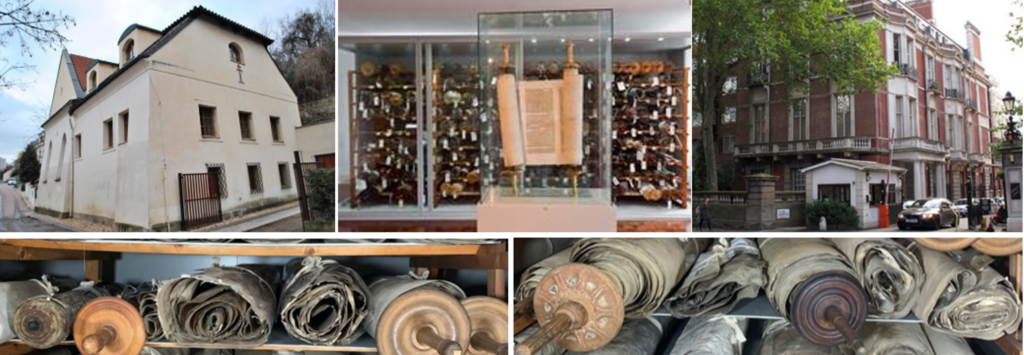
In 1942, under the control of the Nazi authorities of the Protectorate of Bohemia and Moravia, members of Prague’s Jewish community, at the initiative of Karel Stein², obtained permission to gather the religious treasures of the country’s devastated synagogues in the Central Jewish Museum³. Approximately 1,800 Torah scrolls were catalogued there, each identified by its place of origin. From 1956 to 1959, the scrolls were assembled in the former Michle Synagogue⁴ on the outskirts of Prague.

In 1963, the Czechoslovak State, through Artia⁵, offered the scrolls for sale to the London art dealer Eric Estorick⁶. He informed Ralph Yablon⁷, who agreed to finance the purchase after the scrolls had been examined in Prague by Chimen Abramsky⁸ and approved by Rabbi Harold Reinhart⁹ of Westminster Synagogue.

On 7 February 1964, two trucks unloaded 1,564 of these scrolls at Kent House¹⁰ for the benefit of the Memorial Scrolls Trust¹¹.

Sofrim examined the scrolls and restored them whenever possible. The Memorial Scrolls Trust loans them to synagogues, schools, and museums. Scrolls that are kosher are used for public Torah reading; the others serve educational and commemorative purposes. Any institution that closes or merges must return its scroll. Today, these scrolls are found in more than 1,300 communities and institutions, from Alaska to New Zealand.


¹ In the Diaspora, Shemini Atzeret has its own readings: Deuteronomy 14:22-16:17 (15:19-16:17 on weekdays) • Numbers 29:35-30:1 • I Kings 8:54-9:1. Simchat Torah is celebrated on the following day.
² Karel Stein (1906-1961), head of the Rural Affairs Department of Prague’s Jewish Community. He survived the war and resumed his work at the museum.
³ Among the museum staff, Chief Curator Josef Polák (1886-1945), an art historian active in the Resistance, was arrested by the Gestapo in August 1944 and disappeared at Auschwitz in January 1945. Rabbi and librarian Tobias Jakobovits (1887-1944) and architect František Zelenka were deported to Auschwitz in the autumn of 1944 and perished there. Art historian Hana Volavková (1904-1985) survived and reopened the museum on 13 May 1945.
⁴ After the war, the museum lent scrolls to the re-established Jewish communities of Bohemia, Moravia, and Slovakia. Many were later returned when a number of those communities disappeared under the Communist regime.
⁵ Artia was a Czechoslovak state enterprise based in Prague that held the monopoly on the foreign trade of cultural property from 1953 until its dissolution in 1990. Since the museum had been nationalised in 1950, the scrolls were state property and could be sold in exchange for the foreign currency needed by the regime.
⁶ Eric Estorick (1913-1993), born Elihu Estorick in Brooklyn to Jewish immigrants from Russia, directed the Grosvenor Gallery and frequently travelled to Prague to acquire works of art. He was seeking a Torah scroll for his father when Artia brought him to Michle.
⁷ Ralph Yablon (1906-1984), a lawyer who became a businessman and philanthropist, was a founding member of Westminster Synagogue and contributed to the purchase of Kent House. He remained a trustee of the Trust until his death.
⁸ Chimen Abramsky (1916-2010), historian and bibliographer, was a specialist in ancient Hebrew books and manuscripts, long associated with Sotheby’s before becoming Professor of Jewish Studies at University College London. He was the son of Rabbi Yehezkel Abramsky, author of Hazon Yehezkel and a dayan of the London Beth Din.
⁹ Harold Reinhart (1891-1969) served as rabbi of Westminster Synagogue from 1957 to 1969.
¹⁰ Kent House was acquired by the congregation in 1960. The Trust Museum, located on the third floor, may be visited by appointment.
¹¹ Each scroll bears a numbered brass plaque from 1 to 1,564. The Trust also preserves its original Prague inventory number, making it possible to identify its town of origin. In 2017, a scroll originating from Olomouc (Moravia) was returned to the city’s revived Jewish community. A non-kosher scroll is now displayed in the Czech Parliament. The full story is told by Philippa Bernard in Out of the Midst of the Fire.