Terumah (תרומה – offering / contribution)
Exodus 25:1–27:19 — I Kings 5:26 – 6:13
God instructs Moses to collect voluntary offerings, given wholeheartedly, in order to provide the materials needed for the construction of the Mishkan.
The haftarah describes the beginning of the construction of Solomon’s Temple.
Exodus 25:8
וְעָשׂוּ לִי מִקְדָּשׁ וְשָׁכַנְתִּי בְּתוֹכָם.
They shall make Me a sanctuary, and I will dwell among them.
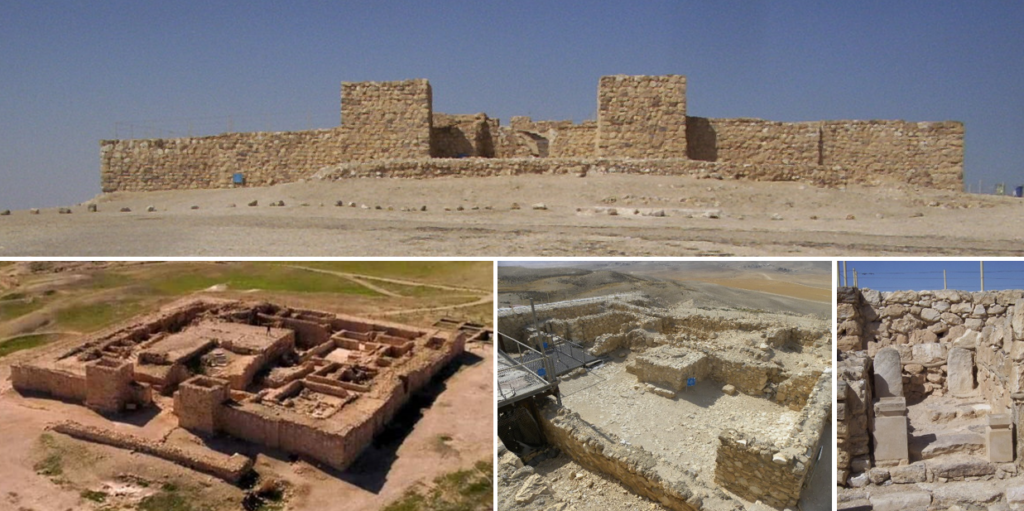
The sanctuary of Arad, located in the Negev Desert, was uncovered during the Tel Arad excavations conducted in the 1960s–1970s by Yohanan Aharoni [1], and later revisited and re‑examined by Ze’ev Herzog [2] and the team from Tel Aviv University.
Built within a fortress of the Kingdom of Judah as early as the 10th century BCE, it includes a courtyard, an altar of unhewn stone, a sacred hall, and a raised space interpreted as a “Holy of Holies.”
The organization of the site, arranged in concentric degrees of sanctity, directly evokes the structure of the Mishkan.
This sanctuary reflects an ancient cultic tradition practiced in the Kingdom of Judah until the successive reforms of the 8th and 7th centuries BCE led by Kings Hezekiah and Josiah [3], who sought to abolish local sanctuaries in order to centralize divine worship in the Temple of Jerusalem.
[1] Yohanan Aharoni (1919–1976), Israeli archaeologist, pioneer of biblical archaeology.
[2] Ze’ev Herzog (born 1941), Israeli archaeologist, professor at Tel Aviv University.
[3] Hezekiah (Hizkiyahu) and Josiah (Yoshiyahu), kings of Judah in the 8th and 7th centuries BCE.
Hezekiah’s reform is described in II Kings 18–20, especially II Kings 18:1–8, where he abolishes the high places and centralizes worship in Jerusalem.
Josiah continues this process a century later: his reform is recounted in II Kings 22–23, particularly II Kings 23:4–20, where he eliminates provincial sanctuaries.
Parallel accounts appear in II Chronicles 29–32 (Hezekiah) and II Chronicles 34–35 (Josiah), fully accepted in rabbinic tradition.