Vayikra (וַיִּקְרָא – “He called”)
Leviticus 1:1–5:26 — Isaiah 43:21–44:23
Vayikra opens the third book of the Torah, devoted to the service of the Mishkan and to the priestly function. It details the various types of offerings — ‘olah, minḥa, shelamim, ḥatat and asham — and introduces the principle of the qorban, literally a “means of drawing near.” The haftarah from Isaiah evokes Israel as a people “formed to declare My praise.”
Leviticus 2:1
וְנֶפֶשׁ כִּי־תַקְרִיב מִנְחָה
“When a soul presents a minḥa…”
The minḥa[1] is a modest offering, composed of flour mixed with oil and a handful (קֹמֶץ – qomets) of incense[2]. It could be brought at any time of day as an expression of gratitude, devotion, or atonement.
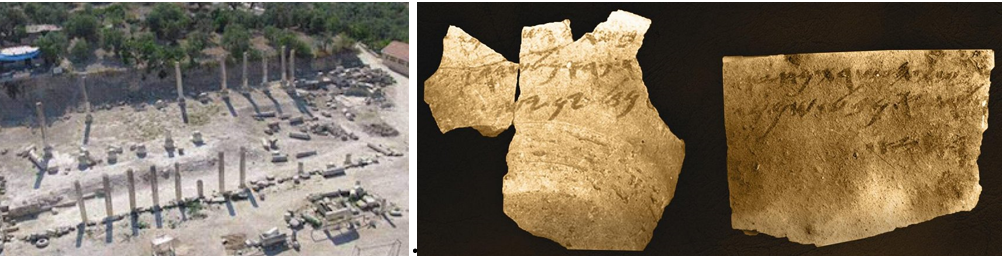
Between 1908 and 1910, excavations at Shomron[3] conducted by George Andrew Reisner[4] uncovered an exceptional group of ostraca dated to the early 8th century BCE. These inscribed potsherds attest to a structured economic and administrative system: networks of collection, redistribution of agricultural produce, and the transport of wine, oil, and other goods.
They shed light on the organization that supported the cult. Recent analyses (2020) carried out at Tel Aviv University reveal a centralized bureaucracy: they indicate that only two scribes — both working in the city of Shomron — wrote the 31 ostraca examined.
In the Roman period, Herod the Great[5] rebuilt the city and renamed it Sebaste. The modern village that now occupies the site bears the name Sebastia, an Arabized form of the ancient name.
[1] The minḥa was often brought by those of modest means (cf. Ramban; Sifra). The incense used was pure levona (frankincense), distinct from the qetoret, a complex blend of eleven aromatics. This offering could be brought after the morning sacrifice and up to, but not including, the onset of night.
[2] Frankincense is a resin extracted from the male tree of the Burseraceae family, notably Boswellia sacra. This tree, native to the Dhofar region (Sultanate of Oman), takes about ten years to produce high‑quality resin.
[3] Shomron (Samaria) was the capital of the kingdom of Israel, founded by King Omri (1 Kings 16:24). The name Sebastos is the Greek form of the Roman imperial title Augustus.
[4] George Andrew Reisner (1867–1942), an American archaeologist trained at Harvard, was one of the pioneers of scientific archaeology in the Near East. His excavations at Shomron (1908–1910) uncovered the first series of Samaritan ostraca, revealing the existence of a structured administrative system in the 8th century BCE. The ostraca are preserved mainly in the Istanbul Archaeological Museum.
[5] Herod I the Great (c. 73–4 BCE), son of Antipater, belonged to the Herodian dynasty. King of Judea from 37 to 4 BCE, he gave the Second Temple its monumental form. His life is known chiefly through the writings of Flavius Josephus.
The Five Types of Qorbanot
– The ‘olah (עֹלָה) is the wholly burnt offering: everything “ascends” to God. It expresses total surrender, a gift without return.
– The minḥa (מִנְחָה), made of flour, oil, and incense, is the simple offering of the humble — a modest gift presented to God.
– The shelamim (שְׁלָמִים) are peace offerings shared between the altar, the priests, and the offerer; they celebrate harmony and gratitude.
– The ḥatat (חַטָּאת) atones for an unintentional sin and restores the balance disrupted by error.
– The asham (אָשָׁם) concerns specific transgressions requiring restitution or reparation; it affirms moral responsibility.