Behar – Be’hukotai
(בְּהַר – בְּחֻקֹּתַי / On the mountain – According to My statutes)
Leviticus 25–27 • Haftarah: Jeremiah 16,19 – 17,14 • Pirkei Avot, chapter 5
God speaks “on the mountain,” revealing laws concerning the land, rest, and social justice. He promises that if Israel walks in His ways, He will lead it forward in elevation and dignity. The prophet Jeremiah affirms that even in exile, the promise of the land endures.
Leviticus 26:13
וָאוֹלֵךְ אֶתְכֶם קוֹמְמִיּוּת
“I made you walk in uprightness and elevation.”
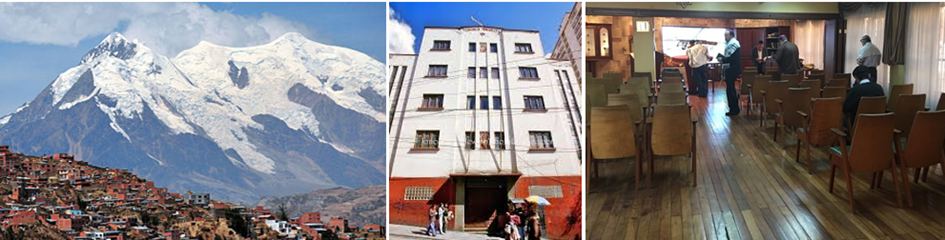
La Paz lies in a steep valley of the Andes Cordillera, dominated by the silhouette of Mount Illimani [1]. The Círculo Israelita de Bolivia synagogue is widely cited as the highest synagogue in the world, located at approximately 3,650 meters above sea level.
Jewish presence in Bolivia is attested prior to the twentieth century (with conversos in the sixteenth and seventeenth centuries), but the community took shape primarily from 1938 onward, when Bolivia opened its borders to Jewish refugees fleeing Nazi persecution. According to historian Leo Spitzer [2], several thousand Jewish refugees arrived in the country between the late 1930s and the early 1940s, laying the foundations of a structured communal life through the creation of religious, educational, and cultural institutions.
After reaching a peak in the 1950s, the Bolivian Jewish community experienced steady emigration to Israel and the Americas. Today, only a small core remains [3], mainly in La Paz and Santa Cruz.
[1] Illimani is a name of Aymara origin. Aymara, together with Spanish and Quechua, is one of Bolivia’s three official languages. The name is commonly interpreted as “mountain of light / protective spirit of light,” in reference to the reflection of sunlight on its eternal snows, though other interpretations evoke the image of a luminous condor.
[2] Leo Spitzer, Hotel Bolivia: The Culture of Memory in a Refuge from Nazism, Hill & Wang, 1998. Estimates of the number of Jewish refugees welcomed by Bolivia between 1938 and the early 1940s vary by source; Spitzer, drawing on testimonies and contemporary documents, suggests a total that may have reached nearly twenty thousand people.
[3] The Times of Israel, “In La Paz, Bolivia, a Symbol of Jewish Resilience,” October 5, 2024. The article describes the current life of the Círculo Israelita de Bolivia and highlights the vitality of a community that is now small but active.