Vayera (וירא – And He Appeared)
Genesis 18:1–22:24; II Kings 4:1–37 (Sephardim: 4:1–23)
Avraham is recovering from his circumcision when G-d comes to visit him [1]. Three men appear before him and announce that within a year Sarah, aged 90, will have a son. G-d had closed every womb of the household of Avimelekh [2]; Avraham prays for it, and G-d answers him. Hagar is sent away at SVayera is filled with wombs that close and open. Sarah gives birth to Yitzhak, the household of Avimelekh comes back to life, and the Shunammite embraces her son. In the midst of these births, healing appears: one man prays for another [3].
Genesis 20:17
וַיִּתְפַּלֵּל אַבְרָהָם אֶל־הָאֱלֹהִים וַיִּרְפָּא אֱלֹהִים אֶת־אֲבִימֶלֶךְ וְאֶת־אִשְׁתּוֹ וְאַמְהֹתָיו וַיֵּלֵדוּ
“Avraham prayed to G-d, and G-d healed Avimelekh, his wife and his maidservants, and they bore children.”
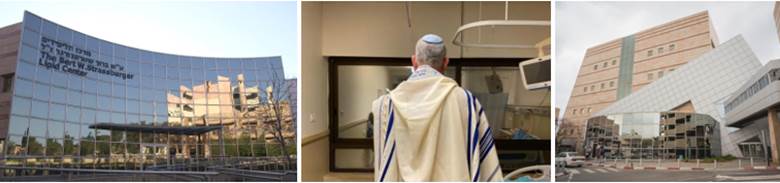
On Tel HaShomer hill [4], named after the organization of Jewish watchmen founded in 1909 in the Galilee, a forerunner of the Haganah, stands Sheba Medical Center [5]. In 1948, the IDF Medical Corps, then headed by Chaim Sheba, took over the hospital of the camp the British army had just abandoned, to treat the wounded of the War of Independence.
Today, doctors and researchers keep watch there day and night to rebuild organs [6], fight infertility [7] and bring healing.
This work, driven by its innovation center ARC, earned Sheba sixth place among the world’s “smart” hospitals in the October 2026 ranking by Newsweek and Statista [8]. It is the only Israeli institution in the top 10.
[1] Bikur cholim, visiting the sick. According to Rashi (18:1, based on Bava Metzia 86b), it was the third day after the circumcision, the most painful one, and G-d came to inquire after Avraham’s health. Rabbi Chama bar Chanina derives the rule: “The Holy One, blessed be He, visited the sick, as it is written: ‘Hashem appeared to him by the oaks of Mamre.’ You too, visit the sick” (Sotah 14a). The Tur (Yoreh De’ah 335) bases the mitzvah of bikur cholim on this verse.
[2] The verse (Genesis 20:18) doubles the verb: עָצֹר עָצַר, “closing, He closed.” According to Rabbi Elazar (Bava Kamma 92a), the man suffered a single closure, the woman two: conceiving and giving birth. Even the hens of the household stopped laying. Rashi goes further: the closure affected כְּנֶגֶד כָּל פֶּתַח, every opening of the body, and וַיֵּלֵדוּ is in the masculine plural, “they bore,” not the feminine: according to the Targum, it means here “they were relieved,” as their orifices reopened. The healing therefore concerns Avimelekh himself. The same Talmudic passage derives a rule: one who prays for another while needing the same thing is answered first. And immediately afterward: “And Hashem remembered Sarah” (21:1). According to Yevamot 64b, Sarah did not even have a womb (אֲפִילּוּ בֵּית וָלָד אֵין לָהּ): her pregnancy was a creation rather than a healing.
[3] The 8th blessing of the Amida, Refa’enu, takes up in the plural Jeremiah 17:14: רְפָאֵנִי ה’ וְאֵרָפֵא, “Heal me, Hashem, and I shall be healed.” Why is healing the 8th blessing? Rabbi Acha answers: מתוך שניתנה מילה בשמינית שצריכה רפואה, לפיכך קבעוה בשמינית, “since circumcision was given for the eighth day, and it requires healing, healing was placed in the eighth” (Megillah 17b). And Vayera opens with Avraham recovering from his circumcision. According to Rashi (18:2, based on Bava Metzia 86b), one of the three visitors, the angel Raphael, “G-d heals,” came to heal him.
[4] The name of the hill recalls the Jewish watchmen of 1909, but the word goes back further. The Psalmist promises: “He neither slumbers nor sleeps, the Guardian of Israel” (Psalms 121:4).
[5] Chaim Sheba, born Scheiber in 1908 in Frasin, Bukovina, headed the IDF Medical Corps from 1948 to 1950. He directed the hospital from 1953 until his death in 1971, after which the hospital was named after him.
[6] In 2025, Prof. Benjamin Dekel’s team grew miniature kidneys from stem cells. They lived 34 weeks, reproducing step by step the growth of the kidney in the womb (B. Dekel et al., The EMBO Journal, 2025; Times of Israel, August 5, 2025).
[7] In 2008, Ayelet Rozenberg, 21, learns that she has lymphoma. Before chemotherapy, which threatens her fertility, Prof. Dror Meirow’s team removes and freezes part of her ovarian tissue, then reimplants it once she has recovered. She has since given birth to four sons, a world first (Sheba Medical Center, “Ayelet’s Miracle”; JNS, “Four little miracles,” January 3, 2023).
[8] Newsweek/Statista, World’s Best Smart Hospitals 2027. Sheba was 9th in the 2026 edition. ARC (Accelerate, Redesign, Collaborate), launched in November 2019, brings together doctors, researchers and start-ups on the campus.arah’s request. Wandering in the desert, she moves away from her son Ishmael so as not to watch him die of thirst, but G-d opens her eyes, and she sees a well. In the haftarah, Elisha tells a barren woman of Shunem that she will embrace a son.