Ki Tavo (כִּי תָבוֹא — “When You Come”)
Deuteronomy 26:1 – 29:8 • Isaiah 60:1 – 22
Moses sets out the laws concerning entry into Eretz Israel, then describes the blessings proclaimed on Mount Gerizim and the curses on Mount Ebal. On the plains of Moab, the covenant is renewed. The prophet Isaiah then announces the restoration of Jerusalem and calls on the city to arise and shine.
Deuteronomy 26:1–2
וְהָיָה, כִּי־תָבוֹא אֶל־הָאָרֶץ […] וְלָקַחְתָּ מֵרֵאשִׁית כָּל־פְּרִי הָאֲדָמָה
“When you have entered the land that the LORD your God is giving you as an inheritance… you shall take some of the first fruits of the soil.”
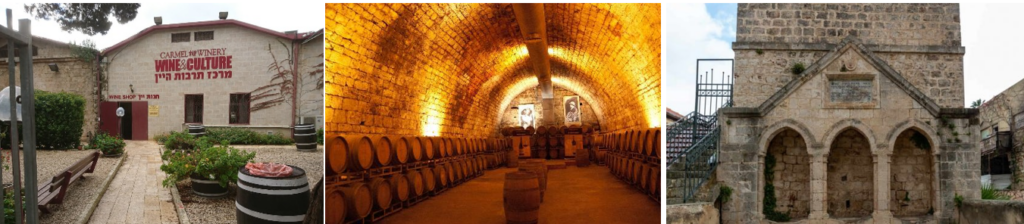
Entering the land, settling it, and bringing the first fruits constitutes the founding gesture of settlement. Zikhron Yaakov was established on December 6, 1882 by pioneers of the Hovevei Zion movement[1], who had come from Romania, on the Ottoman lands of Zamarin[2], south of Mount Carmel. The early years were difficult, but Edmond Rothschild[3] soon took charge of the colony’s development, organized its agricultural operations, and provided steady financial support. That same year, he founded Carmel Winery[4], Israel’s first industrial winery, introducing grape varieties from Château Lafite Rothschild[5]. In 1886, he had the Ohel Yaakov Synagogue built, dedicated to the memory of his father Jacob Mayer Rothschild[6], a building of local stone that became one of the village’s first public structures.
The cellars were laid out on several levels to allow the grapes to be moved by gravity. They included stone and later cement vats, natural ventilation, and separate spaces for fermentation, storage, and preparation for export. This layout, inspired by the wine cellars of Bordeaux, introduced modern winemaking to the region and gave lasting structure to its agricultural activity.
The synagogue and the winery stand in the historic center, a short distance apart, forming an architectural and communal nucleus that marks the colony’s beginnings.
[1] Hovevei Zion (“Lovers of Zion”) was a network of local societies founded in the Russian Empire after 1881. They encouraged Jewish agricultural settlement in Eretz Israel, organized fundraising and land purchases, and sent out the first groups of the First Aliyah.
[2] Zamarin was a former Ottoman agricultural estate made up of a few houses, cultivated land, and water sources, under the administrative district of Carmel.
[3] Edmond Rothschild (1845–1934), a French banker and philanthropist, financed land purchases, sent agricultural engineers, introduced European methods, established local administrations, and provided ongoing support to the new settlements.
[4] Carmel Winery, founded in 1882, takes its name from the Ottoman administrative district of Carmel. The winery at Zikhron Yaakov was joined in 1892 by a second site at Rishon LeZion, intended for production and export.
[5] Château Lafite Rothschild, the great Pauillac wine estate, sent grape varieties to Eretz Israel between 1882 and 1886, including Cabernet Sauvignon, Cabernet Franc, Merlot, Malbec, and Petit Verdot, as well as Sémillon and Sauvignon Blanc.
[6] Jacob Mayer Rothschild (1796–1868), son of Salomon Mayer Rothschild, took part in the family’s affairs during the 19th century. He was the nephew of James (Jacob) Mayer Rothschild, who founded the Rothschild Frères bank in Paris in 1817. The title of Baron de Rothschild belongs to the British branch, created in 1822 for Nathan Mayer Rothschild, brother of Salomon Mayer Rothschild.